


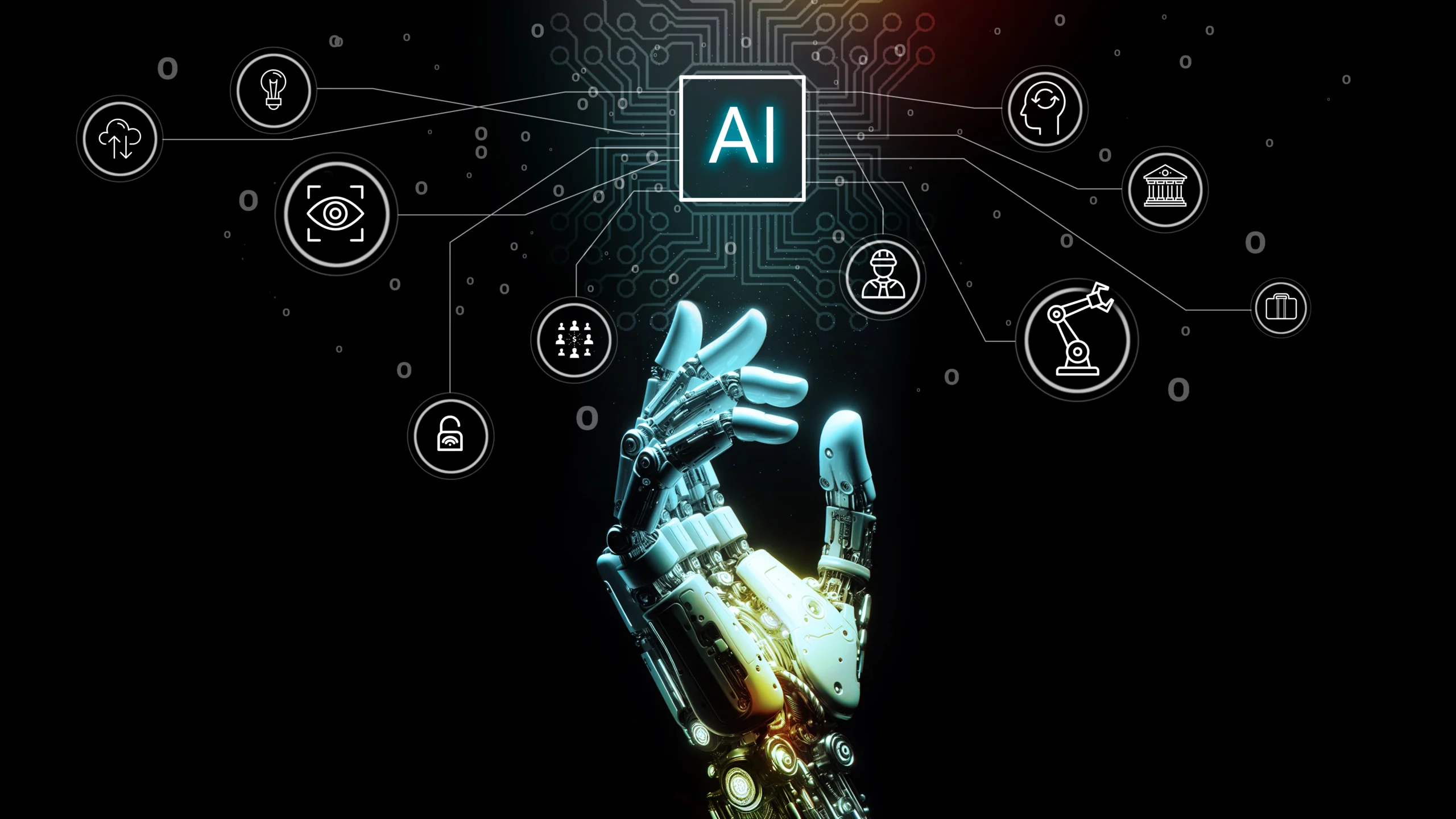
Picture this: a software program that doesn’t just crunch numbers or answer emails. It hires other programs. It negotiates prices. It pays for data, tips a rival bot for a job well done, and settles the whole thing on a blockchain — no human clicking “approve” anywhere in the loop. That’s not science fiction anymore. That’s an AI agent economy, and it’s quietly stitching itself together on-chain right now.
Honestly, the phrase sounds like buzzword soup at first. But strip it down and the idea is simple. An AI agent is just an autonomous piece of software with a goal. Give it a wallet, give it rules, and suddenly it can transact on its own. Multiply that by thousands, and you’ve got something that looks a lot like… well, an economy.
What Exactly Is an AI Agent Economy?
Think of a busy farmers market. Vendors sell, buyers haggle, money changes hands, and nobody runs the whole thing from a central office. An AI agent economy works the same way — except the vendors and buyers are bots, and the currency lives on a blockchain.
Each agent has a purpose. One might scrape real-time weather data. Another might trade tokens based on that data. A third might audit the first two and flag bad behavior. They discover each other, agree on a price, and settle payment in stablecoins or native crypto — all without a human signing off.
That last part matters. Autonomous on-chain transactions are the plumbing that makes the whole thing flow. Without them, agents are just talking. With them, agents are doing.
Why Blockchain Is the Natural Home for Agent Payments
You might ask — why not just use a normal payment API? Fair question. Traditional finance wasn’t built for entities that don’t have a legal identity, a bank account, or a birthday. Blockchains don’t care about any of that. A wallet is a wallet.
Here’s what makes on-chain rails so appealing for machine-to-machine commerce:
- Programmable money: Smart contracts can release funds only when conditions are met — no invoicing, no net-30 waiting games.
- Permissionless access: Any agent with a wallet can participate. No gatekeeper, no KYC queue.
- Micropayments that actually work: Sending $0.0004 for a single API call is absurd on Visa. On-chain, it’s routine.
- Transparent audit trails: Every transaction is recorded. Great for trust, tricky for privacy — more on that later.
- Composability: Agents can plug into DeFi protocols, NFT marketplaces, oracles — the whole Lego set.
In fact, the combination of AI autonomy and crypto settlement is starting to look less like a niche experiment and more like infrastructure.
How These Transactions Actually Work
Let’s walk through a simple scenario. Say you’ve got a research agent tasked with compiling a market report. It needs data from three sources, each run by a different bot.
- The research agent broadcasts a request with a budget cap.
- Data agents respond with quotes — say, 0.02 USDC each.
- The research agent picks the cheapest credible offers and locks funds in a smart contract escrow.
- Data is delivered, verified by an oracle or a lightweight consensus check.
- The contract releases payment automatically. Done in seconds.
No email threads. No invoices. No “hey, did you get my payment?” texts. Just code meeting code, and money moving the instant the work checks out.
The Role of Smart Contracts and Oracles
Smart contracts are the referees here. They hold funds, enforce rules, and pay out when conditions are met. Oracles — services that feed real-world data onto the chain — act as the agents’ eyes and ears. Without them, a contract can’t know if the weather actually was sunny in Lisbon yesterday.
Together, they form a trust layer. Agents don’t need to trust each other. They just need to trust the code.
Real-World Use Cases Popping Up Now
This isn’t all theoretical. Projects are already testing the waters.
| Use Case | What’s Happening |
|---|---|
| DeFi trading bots | Agents monitor pools, execute arbitrage, and pay gas fees autonomously. |
| Data marketplaces | Bots buy and sell datasets, paying per query in crypto. |
| Compute sharing | Idle GPUs rent themselves out; payment flows on-chain. |
| Autonomous DAOs | Agent-run organizations vote and spend treasury funds without human meetings. |
| Supply chain | IoT devices trigger payments when shipments arrive. |
Sure, some of these are early. But the direction is clear. The machines are getting wallets, and they’re learning to use them.
The Pain Points Nobody Wants to Talk About
It’s not all smooth sailing. Let’s be real about the friction.
- Gas fees: On congested chains, a $0.01 payment can cost $5 to send. Layer-2s help, but it’s still messy.
- Security risks: A buggy agent with a funded wallet is a hacker’s dream. One exploit, and it’s drained.
- Accountability: If an autonomous agent breaks a law, who’s liable? The developer? The DAO? The user who deployed it?
- Privacy: Public ledgers mean every agent transaction is visible. Competitors can watch strategies in real time.
- Oracle manipulation: Feed an agent bad data, and it’ll happily make bad trades.
These aren’t dealbreakers. They’re design problems. And honestly, the space is moving fast enough that solutions are already emerging — zero-knowledge proofs for privacy, account abstraction for smoother UX, reputation systems for trust.
Where This Is All Heading
Zoom out for a second. The internet gave us information at scale. Crypto gave us value transfer at scale. AI is giving us decision-making at scale. Put all three together, and you get economies that run themselves — 24/7, across borders, without a payroll department.
Will it look exactly like today’s crypto? Probably not. The winning designs will likely be hybrids — off-chain computation for speed, on-chain settlement for finality. Some agents will be tiny, doing one job. Others will be sprawling, managing portfolios of sub-agents like a digital conglomerate.
And sure, there’s hype. There always is. But underneath the noise, something structural is shifting. Money is becoming a native language for software. Once agents can earn, spend, and save on their own, the line between “tool” and “participant” starts to blur.
That’s the part worth watching. Not the tokens, not the tickers — the moment a bot pays another bot for a job, and neither one needed us.